
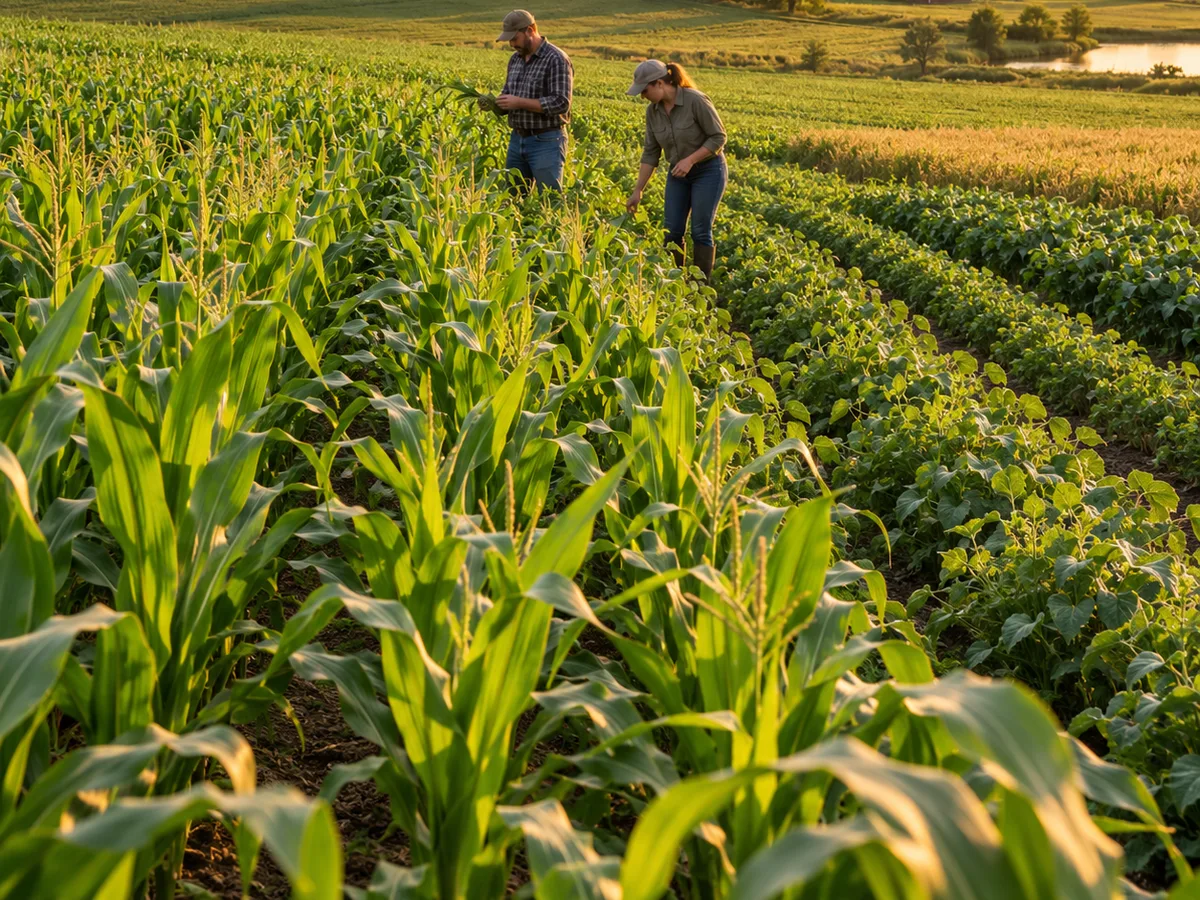
A note that says “irrigation checked” can leave the afternoon with several unanswered questions. Which field? Was the water reaching the lower rows? Did anything need attention? Farm records earn their place when someone can pick up the work without reconstructing the morning. That matters whether the next person is a colleague, a family member or you returning after a day elsewhere.
Write for the person arriving next
Start with the location and the thing being recorded: a field cycle, a flock, a tank or an order. Then describe what was actually seen or done. A familiar nickname may work between two people, yet become confusing when a seasonal worker arrives or a second growing cycle starts.
For an irrigation handoff, an illustrative note might read: “East field, current tomato cycle. Lower rows still dry after the morning run. Check the line before the next scheduled watering.” This gives the next person somewhere to go and something to examine. Add the observation time so an older note cannot quietly pass for today’s conditions.
Separate the plan from the completed work
“Feed ordered” and “feed received” describe different events. So do a planned harvest and the amount actually brought in. Keep those distinctions visible. Where a task stops halfway through, record what remains and why. A delivery delayed by transport should still be distinguishable from a delivery waiting for a buyer’s confirmation.
Apply the same care to costs. A purchase receipt belongs with the purchase; the quantity used belongs with the work. If some material remains in storage, a later reader needs to understand that difference. None of this requires lengthy prose. A short entry with a clear status usually travels further than a paragraph that mixes intentions, observations and completed actions.
Leave an owner and a check time
An observation becomes easier to act on when the follow-up has an owner. Agree who will inspect the irrigation line, confirm the delivery or revisit the crop observation. Give the check a useful point in the working day: before the next watering, before packing starts or at the afternoon handover.
Also say what would count as completion. “Check the line and record whether water reaches the lower rows” leaves less room for interpretation than “sort irrigation.” If the check cannot happen, update the note with the reason and the revised handoff. Avoid marking a task complete merely because it has been passed to someone else.
Give records a place in the day
Farm Progress’s recordkeeping article recommends capturing transactions while the details are fresh. A practical extension is to make a brief record review part of each handover. Read the unfinished items together and resolve anything the wording leaves unclear.
Cultivra’s Crop workspace brings field cycles, crop observations, weather, tasks and financial records into view. Those connections can support a review, while the usefulness of each entry still depends on what was recorded. A saved observation needs enough context to help someone ask a sensible next question.
Try the habit on a single recurring job first. At the next handover, ask the incoming person to explain what happened and what they will check. Anything they have to guess is a clue about what the record needs. Keep that feedback close to the work, and revise the entry while everyone still remembers it.
Further reading
Farm Progress: How to keep up with recordkeeping on your farmCultivra farming workspacesLinked Optimization Network for Intelligent Systems